The Role of Backflow Preventers in Commercial Irrigation Systems
Understanding the hidden hazards of landscape irrigation, chemical injection risks, and why Ontario municipalities mandate annual testing before winterization.
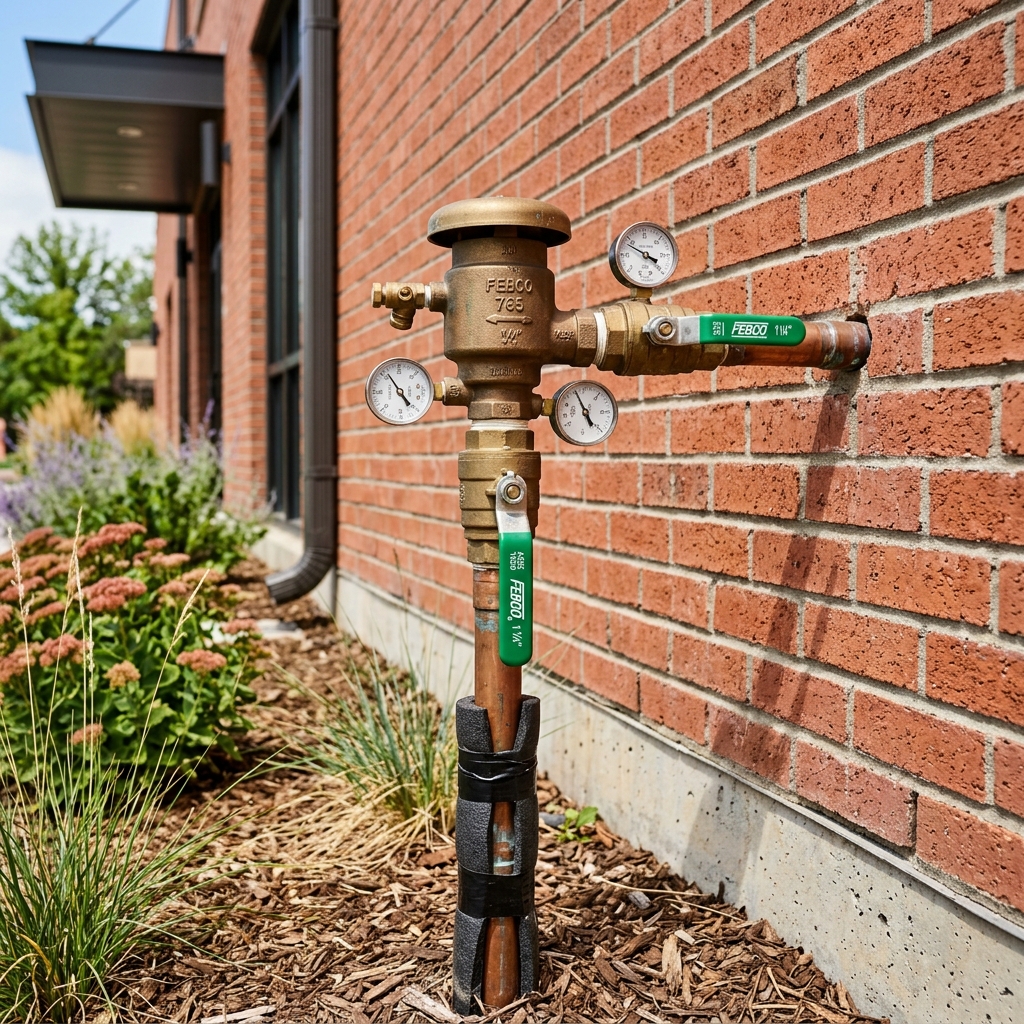
Commercial landscaping is a massive investment. For large corporate campuses, retail plazas, and municipal parks across Ontario, automated irrigation systems are essential for maintaining curb appeal. However, these complex networks of underground pipes, sprinkler heads, and chemical injectors pose one of the most significant—and often overlooked—threats to public drinking water safety.
Without a properly functioning, certified backflow prevention assembly, the very system designed to keep your grass green could pull fertilizers, pesticides, and animal waste directly back into the municipal water main. In this 1,150-word guide, we dive deep into the mechanics of irrigation backflow, the difference between PVB and RPZ devices, and the strict winterization protocols enforced by Ontario bylaws.
The "Hidden Hazard": Why Irrigation Systems Are Dangerous
Unlike indoor plumbing, irrigation lines run entirely outdoors, buried under soil, lawns, and gardens. Because sprinkler heads are often positioned flush with the ground, they naturally pool water when the system shuts off. This creates a perfect storm for back-siphonage.
Consider the typical environment surrounding an irrigation sprinkler head:
- Chemical Fertilizers & Herbicides: Lawn care professionals regularly spray chemicals that settle on the grass and soil.
- Animal Waste: Pets and local wildlife leave biological waste near sprinkler heads.
- Pesticide Injectors: Many large commercial systems use "fertigation"—directly injecting liquid fertilizers into the irrigation water lines.
If a water main break occurs down the street, or a fire hydrant is opened, the pressure in the municipal water supply drops rapidly. This creates a vacuum. Without a backflow preventer, the contaminated water pooled around the sprinkler heads in your lawn is siphoned backward, entering your building’s drinking water and the city supply. This exact scenario has led to documented illnesses and massive EPA fines across North America.
Choosing the Right Device: PVB vs. RPZ
Under the Ontario Building Code (OBC) and the CSA B64.10 standard, commercial irrigation systems require specific types of backflow prevention depending on the hazard level.
1. Pressure Vacuum Breakers (PVB)
A PVB (Pressure Vacuum Breaker) is the most common device used for standard commercial irrigation systems. It contains an independently acting spring-loaded check valve and an independently acting spring-loaded air inlet valve.
When to use: PVBs are permitted when the system is classified as a "High Hazard" but only for back-siphonage. Crucially, a PVB must be installed at least 12 inches (30 cm) above the highest downstream piping or sprinkler head. If the landscape slopes upward from the device, a PVB is not legally permitted because it cannot protect against back-pressure.
2. Reduced Pressure Principle Assembly (RPZ)
An RPZ (Reduced Pressure Zone) assembly is the gold standard for backflow prevention. It consists of two independently acting check valves with a hydraulically operating relief valve in between.
When to use: An RPZ is mandatory if the commercial irrigation system utilizes a chemical injector (fertigation pump) or if the landscape slopes uphill, creating the potential for back-pressure from the weight of the water. RPZs provide maximum protection against both back-siphonage and back-pressure. When an RPZ fails, it discharges water out of its relief port, providing a clear visual indicator that maintenance is required.
The Ontario Climate Factor: Winterization is Mandatory
In Ontario, the harsh winter climate dictates how and when irrigation backflow preventers are maintained. Because these devices are installed outdoors (typically against an exterior wall or hidden in landscaping), they are highly susceptible to freezing.
When water freezes inside a brass PVB or RPZ assembly, it expands. This expansion easily warps the internal rubber check valves, cracks the brass casing, and destroys the expensive test cocks. A single frozen night in late October can ruin a $1,500 commercial assembly.
Proper Winterization Protocol:
- Isolate the Supply: The water supply must be shut off from inside the building.
- Compressed Air Blowout: A compressor is attached downstream of the backflow preventer to blow all residual water out of the underground lines. Note: Never blow compressed air backward through the backflow preventer itself, as high-velocity air can damage the internal springs.
- Open Test Cocks: All test cocks and isolation valves on the device must be left at a 45-degree angle. This ensures no water is trapped inside the ball valves, which could freeze and crack the valve body.
The Property Manager's Responsibility
If you manage a commercial plaza, a corporate office park, or an industrial facility in Ontario with an automated sprinkler system, the legal liability for that system rests entirely on your shoulders. Municipal water authorities (Toronto Water, Peel Public Works, York Region) actively audit irrigation contractors.
When hiring a landscaping company to open your system in the spring, you must ensure that a licensed OWWA Cross-Connection Control Specialist performs the mandatory annual test on the PVB or RPZ. Landscapers who are not licensed plumbers with OWWA certification cannot legally test or repair these devices.
Need to schedule an annual test for your commercial irrigation system before the municipal deadline? Submit your testing request online today, and our certified technicians will handle the digital report filing directly with your municipality.
Ensure Your Property Remains Compliant
If you've received a municipal notice or simply need your annual backflow test completed, our OWWA-certified specialists are ready to help. We handle everything from the physical testing to the digital reporting with your local water authority.