The Ultimate Backflow Prevention & Cross-Connection Audit Guide for Ontario Commercial Property Managers
Published on October 20, 2025 | Updated August 14, 2026 | By Backflow Compliance Technical Team | 7 Min Read (1,350 Words)
Managing commercial, industrial, institutional, or Part 3 multi-residential real estate in Ontario carries significant regulatory responsibility. Among the most critical compliance items on a property manager's annual agenda is Cross-Connection Control and Backflow Prevention. In this 1,350-word master guide, we outline exact technical standards, hazard classifications, and practical tips to keep your properties 100% compliant with Ontario municipal water bylaws.
1. The Regulatory Framework in Ontario: OBC & CSA B64.10
In Ontario, backflow prevention is governed by a two-tiered regulatory system:
- Provincial Standard (Ontario Building Code): Section 7.1.5 of the Ontario Building Code (OBC) mandates that potable water systems be protected against backflow in accordance with the CSA B64.10 / B64.10.1 standards (Selection and installation of backflow preventers / Maintenance and field testing of backflow preventers).
- Municipal Bylaw Enforcement: Local municipalities enforce these standards through specialized Cross-Connection Control Programs. Major municipal bylaws include:
- City of Toronto: Toronto Municipal Code Chapter 851 (Water Supply)
- Peel Region (Mississauga, Brampton, Caledon): By-law 10-2017
- York Region: By-law 2021-44
- City of Hamilton: By-law 10-103
- City of London, ON: Water By-law (W-8)
2. Understanding Facility Hazard Classifications: High vs. Low Hazard
Under CSA B64.10, cross-connections are categorized based on the degree of health risk they present to the public drinking water supply:
High Hazard Facilities
Presents a severe risk of illness or death if backflow occurs (e.g. toxic chemicals, pathogens, heavy metals).
- Chemical manufacturing & processing plants
- Hospitals, medical labs, & mortuaries
- Commercial laundries & car washes
- Cooling towers & chemical boiler feed loops
Required Assembly: Reduced Pressure Principle (RPZ)
Low Hazard Facilities
Presents a minor aesthetic or non-toxic risk (e.g. food ingredients, non-toxic minerals).
- Standard commercial office plazas
- Retail stores & non-chemical warehouses
- Fire sprinkler lines without chemical additives
- Residential Part 3 apartment buildings
Required Assembly: Double Check Valve Assembly (DCVA)
3. 5 High-Risk Areas Property Managers Often Overlook
During routine facility audits, municipal water inspectors often issue non-compliance orders for overlooked cross-connections. Pay close attention to these five areas in your buildings:
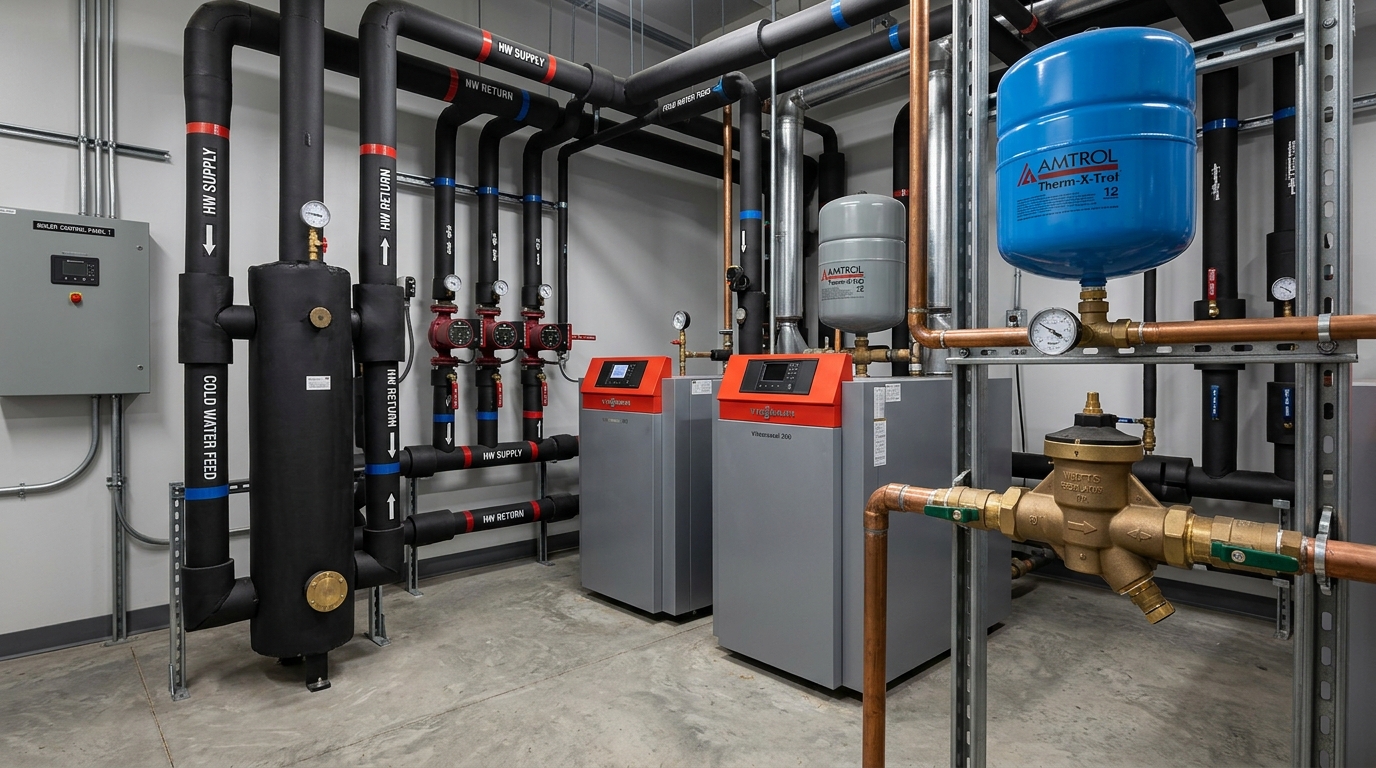
- HVAC Boilers & Chiller Loops: Chemical anti-freeze additives (glycol) or corrosion inhibitors in closed hydronic loops require dedicated RPZ protection on fill lines.
- Janitorial Utility Sinks: Hoses attached to mop sink faucets that remain submerged in buckets of cleaning detergent form dangerous submerged inlets. Install hose bibb vacuum breakers (HBVB).
- Commercial Kitchen Equipment: Beverage carbonators, espresso machines, and dishwashers require specialized stainless steel dual check valves with atmospheric vents.
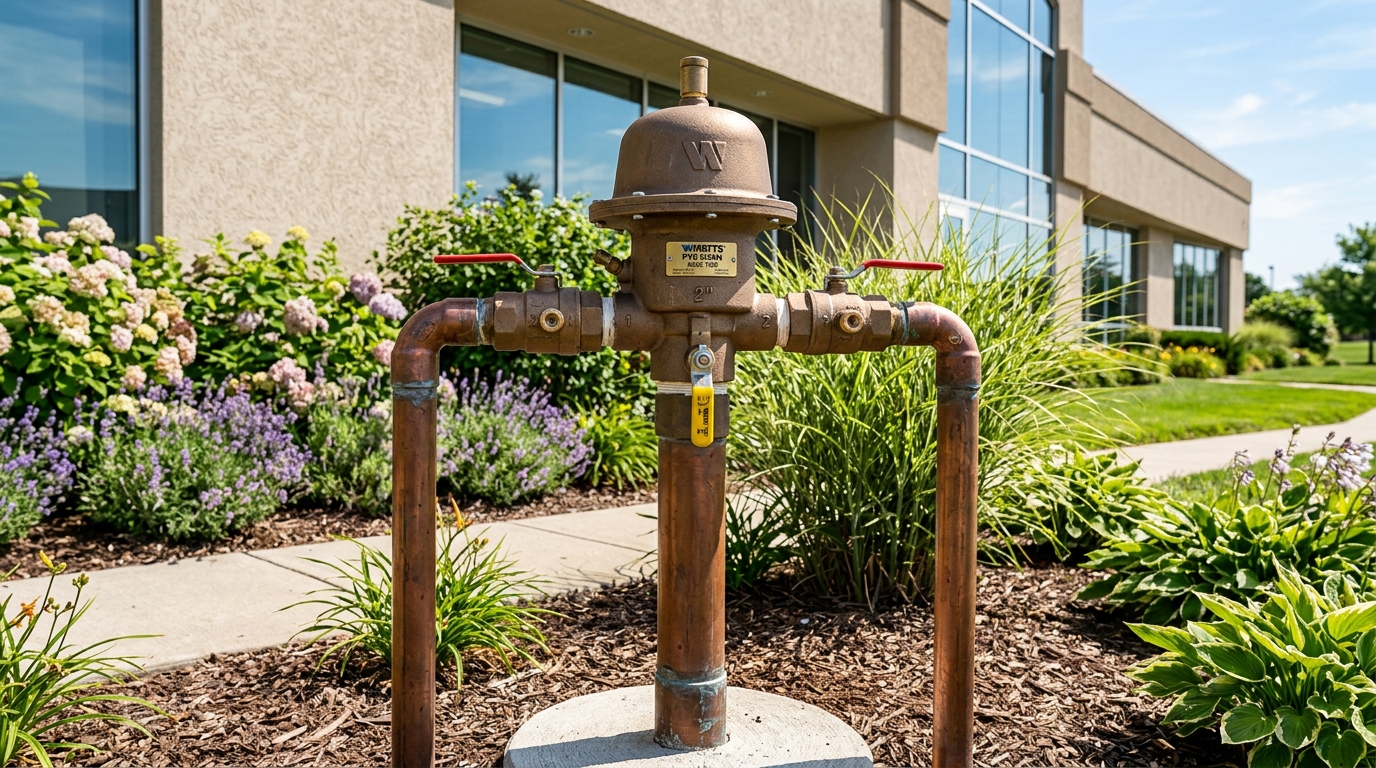
- Irrigation Systems: Landscape sprinkler systems using fertilizer injectors must be isolated with RPZ or Pressure Vacuum Breaker (PVB) assemblies.
- Fire Sprinkler Main Connections: Fire lines containing antifreeze or foam additives require high-hazard protection.
4. Property Manager Maintenance & Inspection Protocol
To avoid emergency shut-off notices and mid-year valve failures, implement a structured inspection protocol:
| Frequency | Inspection Activity | Responsible Party |
|---|---|---|
| Monthly | Visual check for water dripping from RPZ relief ports, physical damage, or valve leaks. | On-site Building Operator |
| Every 5 Years | Comprehensive Cross-Connection Control Survey of all water piping and hazard points. | OWWA-Certified Specialist |
| Annually | Certified field differential pressure testing using NIST-calibrated gauges & municipal digital report filing. | Licensed OWWA Tester |
5. How to Select a Qualified Ontario Backflow Contractor
Not all plumbers are qualified to perform certified backflow testing and municipal report filing. When hiring a contractor, verify the following credentials:
- OWWA Cross-Connection Control Certification: Ensure the technician holds active certification from the Ontario Water Works Association (OWWA).
- Municipal Registration: Verify the company is officially registered on your city's tester registry (e.g. Toronto Water approved tester list, Peel Region qualified person list).
- NIST Gauge Calibration Certificate: Confirm their field differential pressure testing kit carries an up-to-date NIST calibration tag (re-calibrated annually).
Streamline Your Property Portfolio Compliance
We manage annual testing, cross-connection surveys, and municipal report filings for property managers across Toronto, Peel, York, Hamilton, Waterloo, and London, ON.
📋 Request a Portfolio Compliance AuditEnsure Your Property Remains Compliant
If you've received a municipal notice or simply need your annual backflow test completed, our OWWA-certified specialists are ready to help. We handle everything from the physical testing to the digital reporting with your local water authority.